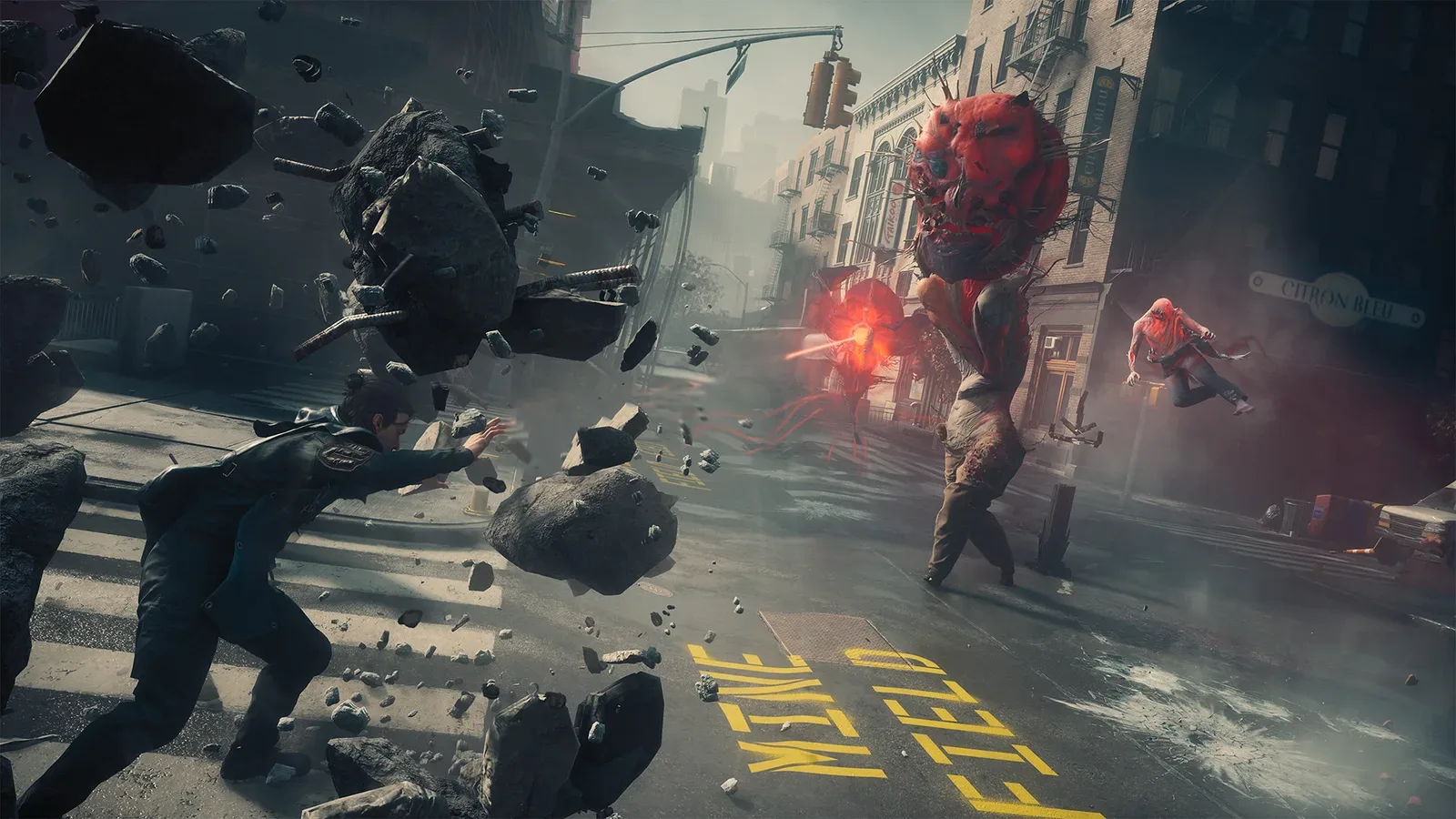
The scores
| Outlet | Score | Takeaway |
|---|---|---|
| VGC | 10/10 | The genre gamble pays off; standout cast and art direction |
| GameSpot | 9/10 | Semi-open-world character action done well |
| DualShockers | 8.5/10 | A major step up in scope |
| IGN | 8/10 | "Hard to escape its gravitational pull", but repetitive late |
| Insider Gaming | 8/10 | Stunning art, compelling story, repetitive encounters |
| PC Gamer | 76/100 | Atmosphere lands, systems less so |
| PlayStation Lifestyle | 7/10 | The genre shift has not fully paid off |
| Eurogamer | 3/5 | Leaving the Oldest House costs it some magic |
| ComicBook | 4/10 | Melee combat "hollow, relentlessly repetitive" |
What critics agree on
The praise is remarkably consistent: art direction, level design, the story and performances, and the audio work. Even reviews that scored the game low single out the presentation as a strength.
Metacritic’s distribution reflects that overall positivity — roughly 93% positive, 5% mixed and 2% negative across 60 reviews. This is not a divisive game in aggregate; it is a game with a small number of very unhappy outliers.
What critics criticise
- Repetition in combat encounters and optional activities over a 30-hour campaign.
- RPG elements described as fairly basic despite the genre shift.
- Camera issues in tight spaces.
- Some cutscene direction called generic relative to Remedy’s usual standard.
- PC optimisation flagged by some reviewers, though upscaling addresses most of it.
The through-line is structural rather than technical: a shooter’s worth of encounter variety stretched across an action RPG’s runtime is where most complaints originate.
Is it worth buying?
It is worth buying at full price if you are here for the world, the art direction, the writing and the set pieces — every review, including the negative ones, rates those highly. It is worth waiting for a sale, or skipping, if combat is the thing you play action games for, because that is where every complaint lands.
| Buy it now if… | Wait or skip if… |
|---|---|
| You want a world worth exploring for its own sake | You want a character-action game measured against Devil May Cry |
| You are happy to be lost, stuck on a puzzle and unguided | You have limited play time and want a guided route through it |
| You played Control for the FBC lore, memos and Objects of Power | You mainly played Control for the shooting |
| You will happily tune the assist sliders to suit yourself | You want the default balance to be right out of the box |
| A 30 to 40 hour commitment sounds appealing | You would rather a tight 12-hour game with no filler |
The two-tier pricing matters here too: $59.99 standard, $69.99 Deluxe, and no Game Pass release. There is no cheap way to sample it first, which is why the combat question is worth settling before you buy.
Is the combat repetitive?
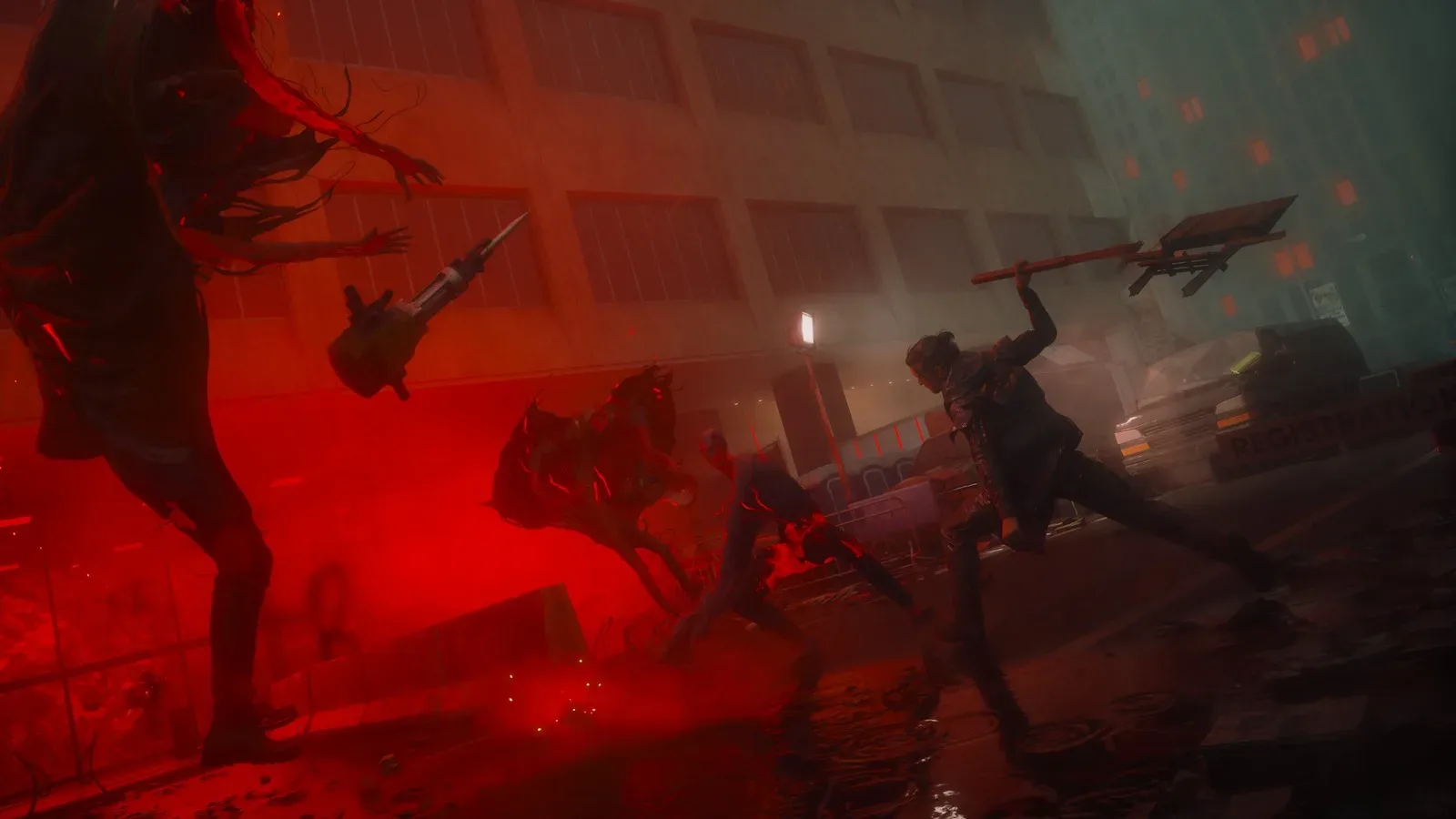
Yes, and that is the single most common criticism. There is a very large volume of combat across a 30-hour campaign, street-level enemies respawn each time you kill a major boss, and GamesRadar+ describes the loop as attack, attack, attack, dodge from hour one to hour 24. Reviewers who liked the combat, such as SkillUp, agree there is too much of it while praising the enemy roster itself.
The specific complaints are consistent enough to list, and each one has a different weight depending on how you play:
- Volume. Almost every intersection and rooftop is patrolled, which is separate again from the encounters marked on your map and the fighting inside missions.
- Respawning. Clear the streets and everything comes back when you kill a major boss anywhere in the city — six or seven times over a full playthrough.
- Enemy health. Heavy enemies take a long time to bring down unless your damage buffs are stacked correctly.
- Interruptions. Ranged and projectile enemies constantly break up melee combos, and some heavy encounters respawn smaller enemies endlessly.
- Bosses. Striking to look at, thin to fight — single opponents with small movesets, which the crowd-focused combat model is not built for.
- Enemy variety. Flagged as merely adequate by several reviewers, though SkillUp rates the roster itself as the best part of the combat.
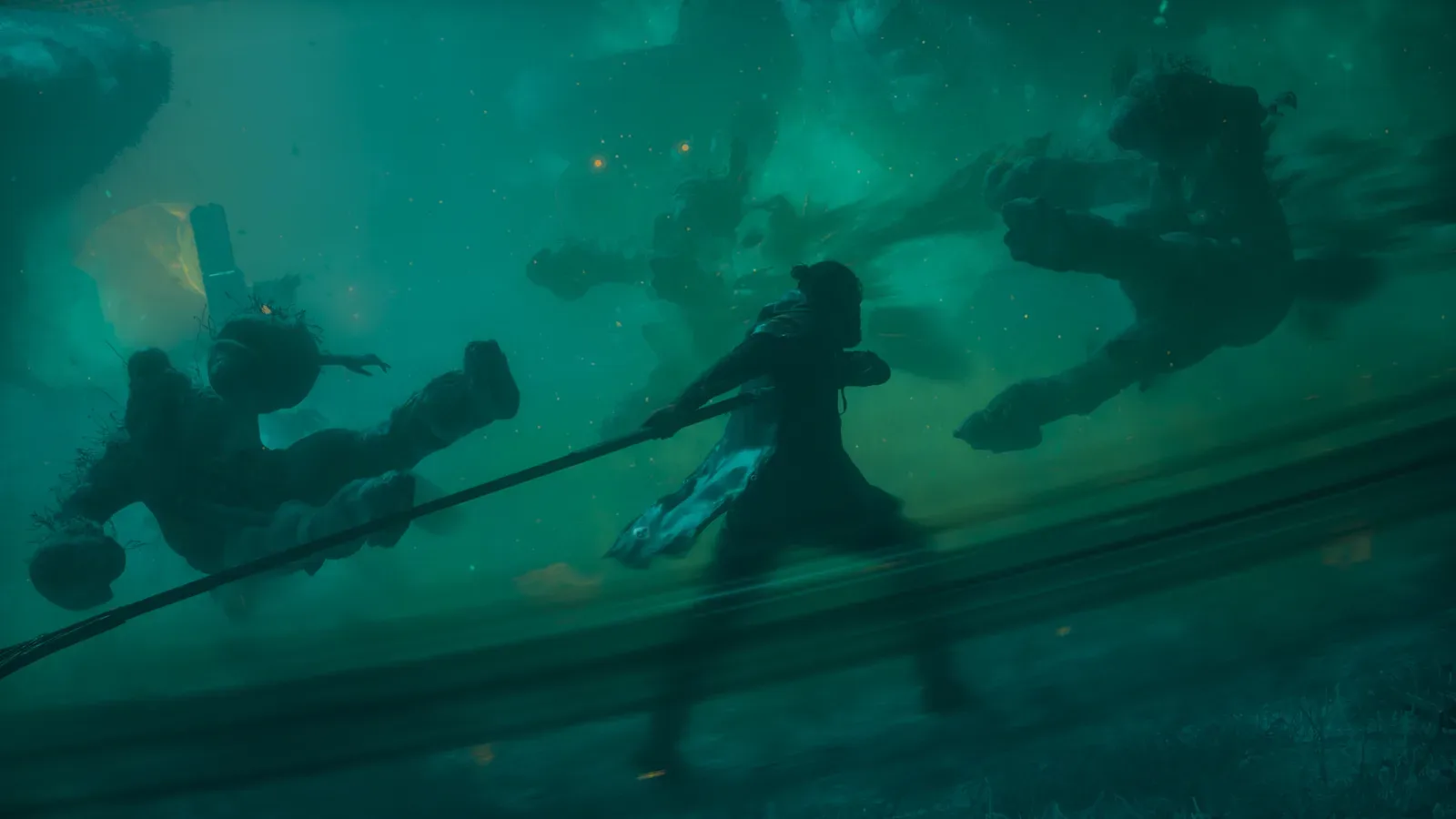
Do the boss fights make up for it? Mostly not. The Resonants are visually spectacular but simple to fight — single opponents with small movesets in static arenas, which is the opposite of what the crowd-focused combat model is built for. The mold boss, which layers adds, tentacles and gravity shifts across multiple planes, is the encounter reviewers point to as the one that works.
Note what is not on that list: nobody says the combat is broken or that the character feels bad to control. Dylan is fast, the animation-cancel windows are unusually generous, and the traversal folds into fights through double jumps, glides, grapples and gravity shifts. The objection is about quantity and pacing, not craft.
Why enemies feel like damage sponges
Enemy health is balanced around your peak damage potential rather than your typical output. When your buffs, damage types and build synergies line up you melt enemies; when they do not, the same enemy feels like a meat sack. PC Gamer makes the same point from the other side: basic attacks alone barely graze heavy enemies until you stack temporary damage bonuses on them.
Those bonuses mostly come from staggering and executing lesser enemies, and from perfect dodges. So a fight goes well when the fodder cooperates and badly when a projectile staggers you out of the window, auto-targeting throws a boulder at the wrong enemy, or a target teleports out of a charged finisher.
Damage types are the other half of it. Mold poison plus fire detonates, and pairing abilities that way is what turns late-game health bars from a slog into a spectacle. Because ability unlocks are tied to Resonant bosses you can tackle in different orders, two players at the same point in the story can have wildly different damage output — which is a large part of why reviews disagree about how spongy the game is.
The settings that fix the biggest complaint
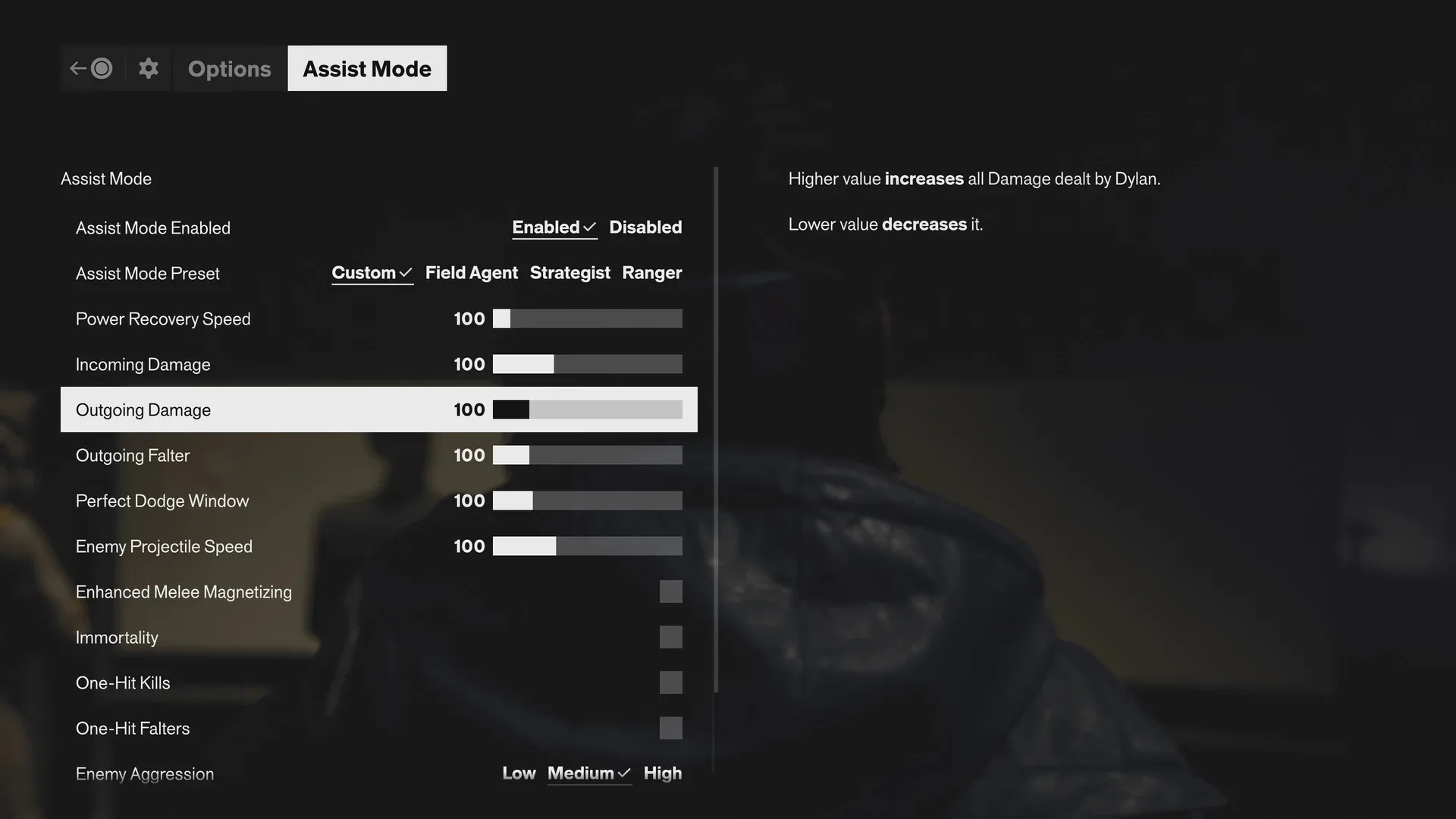
The assist options let you tune incoming damage, outgoing damage, stagger buildup and the perfect-dodge window independently of the difficulty preset. PC Gamer raised outgoing damage and stagger for the final quests and recommends doing it earlier than they did; SkillUp estimates that a 50 to 100 percent damage increase would have improved his playthrough.
If the repetition complaint is the thing holding you back from buying, this is the answer to it. The sliders are granular, can be changed at any time, and nothing in the game is gated behind leaving them alone.
The progression systems are lumpy
The build side is well liked. The Aberrant carries a primary form, a secondary form and a combo finisher, talents are largely conditional — if you dodge, then your next hit launches — rather than flat stat boosts, and everything respecs freely, so specialising into, say, an air-focused build is a real decision rather than a menu formality.
The economy around it is where reviewers agree it misfires, and the two complaints point in opposite directions. SkillUp ran deep into the Aberrant tree by the halfway mark and then waited hours for the materials needed to continue. PC Gamer hit the opposite problem: a glut of points and materials spent on weapon forms they never used and on talents for abilities they had not unlocked yet.
Either way you end up putting points into things you cannot use. It is friction rather than a flaw, but it compounds the combat complaint, because the fix for being underlevelled is doing more of the combat you were already tired of.
You can play it in the wrong order
Effectively yes, and it changes how the game feels. Traversal powers come from Dimensional Faults, the sequences where Dylan follows his sister’s trail, and combat abilities come from beating Resonants. The game does not tell you this and does not steer you toward either, so it is entirely possible to spend ten or more hours in a slower, flatter version of the game than the one the positive reviews are describing.
The powers in question are the hovering double jump, the air dashes, the grapple and the ability to reorient gravity and walk on walls — the things that turn the city from a maze of dead ends into a playground. If you buy it, prioritise Faults and Resonants over open-world activities early; that single decision changes how the first act reads.
It also explains part of the score spread. Reviewers describe the game as heavily backloaded, with the best zones, encounters and mission design in the final ten hours — so how early you open up your kit determines how long the weakest stretch lasts.
What the positive reviews are actually praising
The enthusiastic reviews are not disputing the criticism — SkillUp opens by conceding there is too much combat, too much enemy health, too many map markers and janky progression, and recommends the game anyway. What they are arguing is that the ceiling matters more than the floor.
- Level design that escalates for the full runtime, with the final zone singled out as some of the best in the genre.
- Set pieces such as the descent into the sinkhole, including a honeycomb of apartment blocks where gravity changes per surface.
- Side quests that fuse narrative, traversal and combat rather than padding — several are unmarked and easy to miss entirely.
- A Manhattan built out of ordinary city parts arranged into impossible shapes, described as pulling Inception’s folding-city trick for 30 hours.
- Audio and voice work, with performances that sell an organisation seven years into an unwinnable containment job.
- Genuine puzzles with no character narrating the solution at you — a deliberate refusal to hold your hand that cuts both ways.
One reviewer scoring it full marks reached credits at just under 27 hours with most of the map still unexplored, estimated around 40 hours for a typical run, and called it a Game of the Year contender. The same review lists weak enemy variety and easy-to-get-lost navigation as its reservations — the same items the critical reviews raise, weighted differently.
What the critical reviews are actually arguing
The negative case is not that the game is ugly or broken. GamesRadar+ leads with gorgeous visual design and stunning sequences in its pros, then argues the combat is spread too thin across a world that struggles to justify its size, and that the Resonant boss fights — the things the game is named after — are short, forgettable detours.
The other recurring objection is the protagonist. Where Jesse was enigmatic, Dylan is written as a sheltered, guilt-ridden man the FBC openly resents, which gives the game a meaner tone than Remedy usually has. PC Gamer warmed to him, crediting his rapport with Agent Zoe De Vera and his usefulness as a lens on the FBC’s own cruelty; GamesRadar+ did not. That split is worth knowing before you buy, because Dylan is the whole 30 hours.
Why the spread is so wide
The 10/10 and the 4/10 are reviewing the same game through different lenses. VGC’s perfect score credits the genre gamble and presentation; ComicBook’s 4/10 judges the melee system purely as a character-action game and finds it wanting.
If you value atmosphere, world-building and narrative, the high scores are the better predictor. If you came for mechanically deep melee combat measured against genre specialists, the low scores are the warning worth heeding.
By platform
| Platform | Metascore | Reviews |
|---|---|---|
| PlayStation 5 | 84 | 63 |
| PC | 83 | 34 |
| Xbox Series X | 81 | 10 |
The gaps are small and partly a function of sample size — the Xbox figure rests on ten reviews. There is no evidence of a platform version being substantially worse in critical terms.
Where it sits in Remedy’s catalogue
At 84 it scores higher than the original Control’s 82, making it the best-reviewed game in the series, though Control: Ultimate Edition sits slightly ahead at 85. Coverage consistently frames it as falling short of Alan Wake 2, Remedy’s critical high-water mark.
In 2026 terms it is a strong release that did not crack the year’s top tier. User scores were not yet available at the time of writing, since they only accumulate after release.
Who this game is for
The consensus points to a clear audience. If you value art direction, world-building, story and audio, almost every review — including the critical ones — says you will find those here at a high standard.
If your priority is mechanically deep melee combat measured against dedicated character-action games, the low scores are the ones speaking to you. The complaint is not that the combat is broken but that it repeats across a roughly 30-hour campaign.
What changed from the original
Resonant trades the first game’s third-person gunplay for melee-led combat with the Aberrant, a shapeshifting weapon with multiple forms and separate upgrade trees. Resonance abilities are fuelled by aggressive play, and there is no traditional block to fall back on.
It also leaves the Oldest House for a zone-based Manhattan. Eurogamer’s 3/5 argues that departure costs the series some of its magic, while GameSpot’s 9/10 credits the same decision with giving Remedy room for a semi-open character-action game.
Technical reception
PC reviewers reported the game running well provided an upscaler is enabled, which matches Remedy publishing every performance tier with upscaling assumed and frame generation excluded. Some reviews still flagged optimisation as a weak point.
On console, PS5 offers 1440p/60 Performance and 2160p/30 Quality, PS5 Pro adds ray-traced Balanced and Quality modes with PSSR, Xbox Series X has 60fps and 30fps modes, and Series S is limited to a single 30fps profile.
How long you are committing
Roughly 30 hours for the main story per lead gameplay designer Sergey Mohov, about 35 for a thorough first run, and close to 50 to complete everything. One reviewer hit credits at just under 27 hours with a large share of the map still unexplored and estimates around 40 hours for a typical playthrough. That length is directly relevant to the repetition criticism.
New Game Plus ships at launch and carries abilities over, and talents and artifacts respec freely, so a second run can be built around a different playstyle without restarting progression.
Where to read the full reviews
Both aggregators link every counted review. Metacritic collects 60 of them with the score distribution visible, and OpenCritic lists 63 with its recommendation percentage alongside each outlet.
Given how far apart the extremes sit here, reading two full reviews from opposite ends is more useful than scanning a dozen scores. The disagreement is narrow and specific, which makes it easy to work out which side applies to you.
Scores can still move
Aggregates drift for weeks after launch as late reviews arrive. Our figures were captured on September 18, 2026, the day the embargo lifted, and the live pages are always the authoritative source.
User scores did not exist yet at that point either, since they only accumulate once the public can play. We do not estimate a user score from social sentiment.
Buying context
The Standard Edition is $59.99 and the Digital Deluxe is $69.99, with the Deluxe adding digital extras and, on PS5 only, 48 hours of early access from September 22. There is no Game Pass release, so no subscription route exists.
Pre-orders on every platform include the Hiss Corruption Outfit and Pickpocket’s Tool Artifact, with PlayStation adding the Occult Outfit. Physical editions, including the SteelBook, ship October 15.
Sources
- The Shortcut — Control Resonant review roundup
- Metacritic — CONTROL Resonant
- OpenCritic — Control Resonant
- GamesRadar+ — Control Resonant Metacritic score in context
- GamesRadar+ — Control Resonant review
- PC Gamer — Control Resonant review
- SkillUp — “I strongly recommend: Control Resonant” (video review)
- Cowboy — CONTROL Resonant Review: Remedy’s Best Game Yet (video review)