What Remedy actually said
The question has a direct answer from the studio. Speaking to press after the State of Play gameplay trailer, lead gameplay designer Sergey Mohov said: “This is not a soulslike. It’s a push-forward, action-driven, aggressive-playstyle action game. The player is very much in charge and not [simply] reacting. The main driver of combat is you.” He named Elden Ring and Dark Souls as the comparison he was rejecting.
Remedy frames the game as an action RPG without the inventory management, and creative director Mikael Kasurinen drew the same line from a different angle: “it’s not a survival game, it’s an action game.” Press previews reported the melee as faster-paced than the first Control and closer in style to Devil May Cry and Bayonetta.
Why the loop is push-forward, not reactive
Dylan’s weapon, the Aberrant, shifts between a Primary Form and a Secondary Form with Combo Enders on top, so you tune speed, range and combat role inside a single build. Forms reported in press coverage include Hammer, Blades, Scythe and Fists.
The systems are wired to pay you for closing distance rather than for waiting. Senior communications manager Miika Huttunen described the chain like this:
- Melee attacks restore Dylan’s Combat Ability resource.
- Abilities stun enemies, opening them up for executions.
- Executions temporarily boost melee damage.
“The more you commit to close-range pressure, the more tools you gain to stay in control,” Huttunen said. “It’s a loop designed to reward decisiveness and flow.” That is the opposite of the defensive, punish-on-opening rhythm the soulslike label implies — though different playstyles are supported, including a tactical setup built around summons such as Mold Turrets.
What it does share with the genre
The comparison is not baseless. Mohov’s own description of the combat system is that it is “close-range and demanding, with enemies that require you to read their attacks, manage staggers and status effects, and time your dodges”. If those are the traits you use to identify a soulslike, you will find all of them here.
Remedy acknowledged the system comes with a real learning curve — which is precisely why it built the difficulty options the way it did.
| Soulslike expectation | What Control Resonant does |
|---|---|
| Reactive, punish-on-opening combat | Push-forward pressure; melee feeds the ability resource |
| Fixed difficulty, no sliders | Assist Mode sliders, adjustable in both directions |
| Ranged weapon as a secondary | Shapeshifting melee Aberrant as the primary weapon |
| Stagger and dodge timing matter | Also true here — staggers, status effects and dodge windows |
| Achievements tied to unassisted play | No trophies or achievements gated behind Assist Mode |
Assist Mode replaces difficulty levels
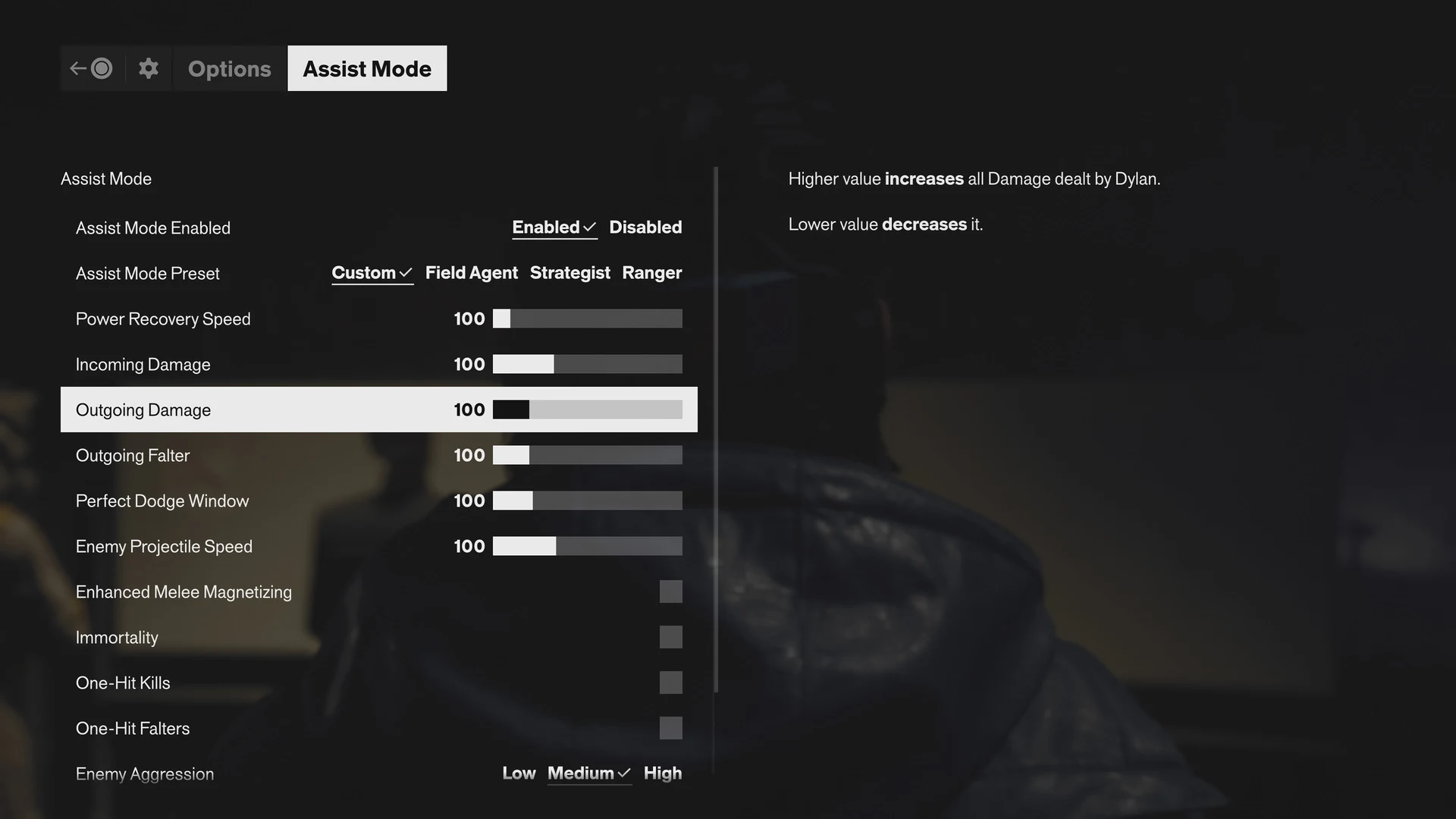
Rather than relying on a handful of traditional difficulty levels, Remedy shipped Assist Mode: customizable options that let you adjust the specific mechanics getting in your way without changing everything else. You can independently adjust Incoming Damage, Outgoing Damage and Outgoing Falter, which controls how quickly you break an enemy’s posture.
If enemies overwhelm you from multiple directions, reduce Enemy Aggression. If you cannot read an attack’s timing, widen the Perfect Dodge Window or reduce Enemy Projectile Speed. Power Recovery Speed helps if managing abilities mid-fight is too much, and Enhanced Melee Magnetizing makes positioning more forgiving. For story-first players, Assist Mode also includes Immortality, One-Hit Kills and One-Hit Falters.
Two details matter for anyone asking this question because they are worried about difficulty. The settings are not shown before your first playthrough — Remedy wants you to feel the intended rhythm first, then enable or disable Assist Mode at any point, starting from a preset if you prefer. And Assist Mode can make the game harder, not just easier: in the first Control the sliders only reduced challenge, while here they run in both directions.
No trophies or achievements are gated behind Assist Mode, so tuning the experience costs you nothing on the completion side.
How it landed with a soulslike reviewer
FightinCowboy, a reviewer whose audience sits squarely in the soulslike space, finished the campaign at roughly 27 hours and scored it a 5 out of 5. His account matches Remedy’s framing rather than contradicting it: he described build freedom across the talent tree, primary and secondary weapon forms and a combo finisher, free respeccing, and a movement-heavy combat flow he compared to Prototype rather than to Dark Souls.
His main friction was navigation, not difficulty. He described a game with no hand-holding, where getting lost between zones and inside transitional areas was routine, and called it a love-hate relationship. On Assist Mode he was positive for the reason Remedy states: players who only want the story can turn the sliders on without penalty.
This section reflects one reviewer’s single playthrough. Treat it as an impression of how the game feels, not as a statement of how its mechanics are defined.
What we deliberately do not claim
We do not publish a fixed number of Aberrant forms. Press coverage names Hammer, Blades, Scythe and Fists, but counts differ between outlets, so what we state as fact is that multiple forms exist and that you pair a Primary and a Secondary with a Combo Ender.
We also do not translate Assist Mode sliders into frame counts or damage percentages. Remedy describes what each option affects, not the exact values behind it.